
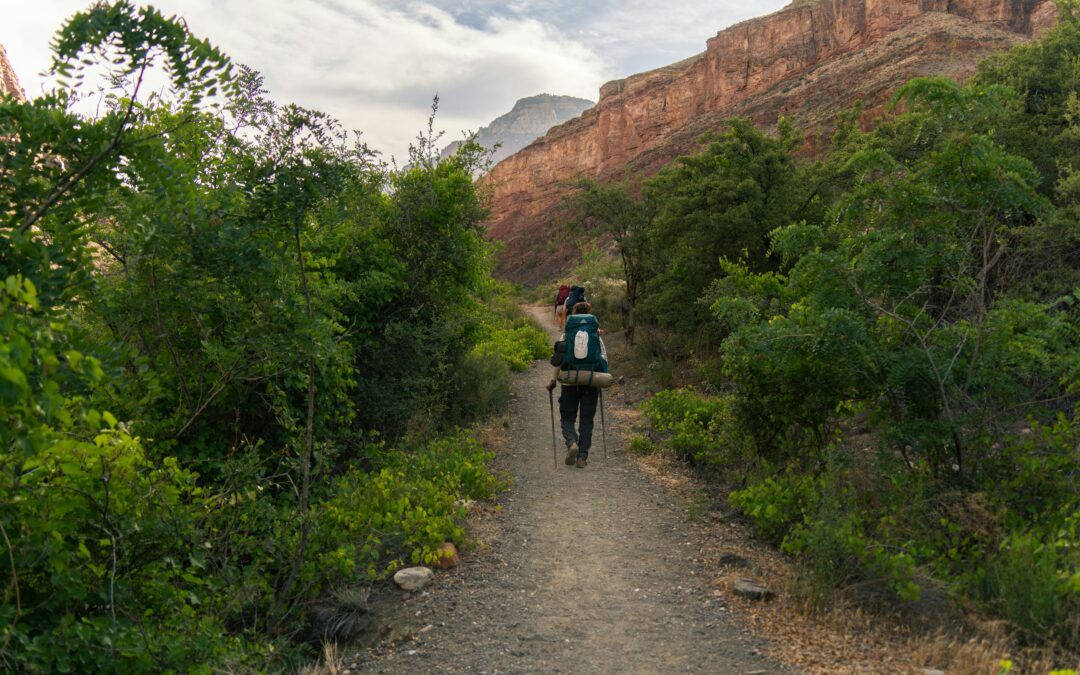
Hiking the Grand Canyon is one of those adventures that are available year-round. However, the Canyon has a way of humbling even the most confident outdoor travelers. From the rim, the trails look manageable- almost serene- but step onto those switchbacks and reality sets in. Distances are longer than they appear and temperatures shift with elevation. The Canyon demands respect and mishaps happen because of small, avoidable mistakes—many of them tied directly to what hikers did or didn’t pack.
Hydration & Water Management- One of the most common errors is underestimating water needs. The dry desert air and changing temperatures quietly drain your body long before thirst becomes obvious. Many first-time visitors assume a single bottle will suffice for a day hike. In the Canyon, that assumption can become dangerous. Carrying multiple liters of water, along with a filtration method or purification tablets, creates a safety net. Electrolyte mixes also help replace salts lost through sweat, keeping muscles functioning and decision-making sharp.
Footwear & Foot Care– Proper footwear separates enjoyable hikes from painful slogs. New boots may look sturdy, but unbroken footwear is a fast track to blisters and hot spots. The Canyon’s long steep descents put enormous stress on feet. Well-fitted, broken-in hiking shoes, moisture-wicking socks and blister care supplies can mean the difference between finishing or turning back early.
Sun & Temperature-– Never underestimate sun exposure, especially during cooler months. Even in winter, the Canyon’s sun reflects off pale rock and amplifies exposure. Skipping hats, sunglasses, or sunscreen frequently end the day with burns, dehydration, and exhaustion. Lightweight long-sleeve shirts, wide-brim hats, and high-SPF protection create a simple shield against an environment that offers little shade. Packing layers allows hikers to adapt as conditions change. Moisture-wicking base layers, an insulating mid-layer, and a lightweight shell provide flexibility without adding excessive weight.
Navigation & Communication– Navigation mishaps also account for many preventable problems. Canyon trails are well maintained, but junctions, fatigue, and fading daylight can cause confusion. Relying solely on cell service is risky. A paper map, compass or GPS device, and offline maps on a phone provide redundancy that could prove invaluable if something goes wrong.
Food & Energy- Energy management plays a bigger role than most expect. The Canyon’s elevation changes burn calories quickly. Skipping meals or packing only minimal snacks can lead to sudden fatigue, dizziness, and poor judgment. High-calorie, easy-to-eat foods spaced throughout the day help maintain steady energy and morale.
Backcountry Essentials– Venturing out overnight makes preparation critical. Lightweight shelter, a season-appropriate sleeping bag, sleeping pad, and reliable stove form the foundation of a safe backcountry setup. Cutting corners here can quickly turn an adventure into a survival situation. Remember, small emergency items often feel optional until they’re suddenly essential. A headlamp becomes priceless if a hike runs longer than expected. A basic first aid kit handles blisters, scrapes, or minor strains. A whistle can signal for help if separated from your group. These lightweight items add peace of mind without significant bulk.
The Grand Canyon doesn’t demand perfection—it demands preparedness. Most disasters begin as small inconveniences that snowball when travelers lack the right tools. Packing smart isn’t about hauling everything you own. It’s about choosing gear that prevents common mistakes before they happen. With thoughtful preparation and respect for the Canyon’s scale and power, your trip becomes what it should be: challenging, unforgettable, and deeply rewarding.